
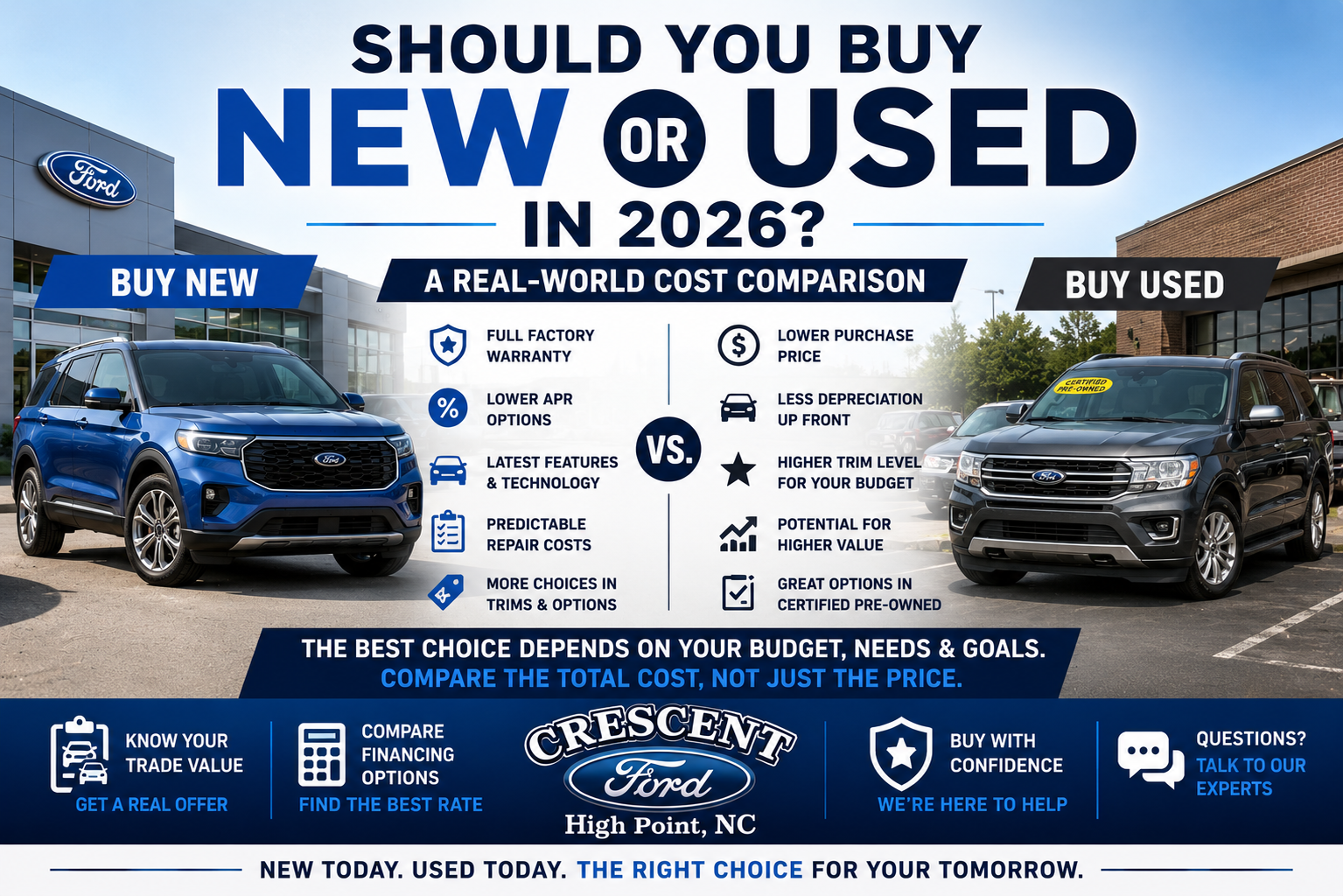
Should You Buy New or Used in 2026? A Real-World Cost Comparison
Buying used is cheaper.
Right?
Usually, a used vehicle will have a lower purchase price than a comparable brand-new one. But if you're deciding whether to buy new or used in 2026, purchase price isn't the only number worth comparing.
Financing can cost more on a used vehicle. A new vehicle may qualify for manufacturer financing incentives that aren't available used. A used vehicle may have already absorbed some depreciation, but it could also need tires, brakes or other maintenance sooner.
Then there's warranty coverage, insurance, how long you plan to keep the vehicle and what your current vehicle is worth.
In other words:
The cheapest vehicle to buy isn't necessarily the cheapest vehicle to own.
And a new vehicle isn't automatically a bad financial decision simply because a used version costs less.
Here's how we'd compare new vs. used if we were shopping for a vehicle in 2026.
Compare New and Used Vehicles at Crescent Ford
New vs. Used: The Quick Answer
There isn't one answer that's right for every buyer.
Buying new may make more sense if:
You plan to keep the vehicle for a long time.
Manufacturer financing makes the numbers attractive.
You want full factory warranty coverage.
You want the latest technology or features.
You want a particular trim, engine, color or configuration.
Predictable repair costs are important to you.
The price difference between new and a comparable late-model used vehicle is relatively small.
Buying used may make more sense if:
Keeping the purchase price down is your biggest priority.
You want more vehicle or a higher trim for your budget.
You're comfortable with some previous mileage and ownership history.
You're paying cash or have competitive financing.
You don't mind that some factory warranty may already have been used.
You find a well-maintained vehicle at a price that creates meaningful savings over new.
But don't make the decision from that list alone.
Put actual vehicles and actual numbers side by side.
That's where things get interesting.
1. Start With Purchase Price — But Don't Stop There
Used usually wins this category.
A three-year-old vehicle will generally cost less than a comparable brand-new version.
That lower price can mean:
Less money down
A smaller loan
A lower monthly payment
Less interest in total
The ability to purchase a higher trim within the same budget
For example, your budget might put you into a new vehicle's entry or mid-level trim but a better-equipped used version of the same model.
That's a legitimate reason to shop used.
But here's where shoppers sometimes make a mistake:
They compare the advertised prices and assume they've completed the financial comparison.
They haven't.
If one vehicle costs $30,000 and another costs $34,000, you don't yet know that the $30,000 vehicle will cost you less overall.
You still need to look at financing, warranty, maintenance, depreciation and how long you expect to own it.
2. Compare the Interest Rate — Not Just the Vehicle Price
This is one of the most important parts of a real-world new-vs.-used comparison.
New and used vehicles don't necessarily finance at the same interest rate.
Used-car loans often carry higher rates than new-car loans. Meanwhile, manufacturers sometimes offer promotional APR programs on eligible new vehicles for qualified buyers.
Those programs change frequently, so we're deliberately not quoting a current Ford APR in an evergreen article.
But the principle matters.
Consider a purely hypothetical example:
Vehicle A: Used
Purchase amount financed: $30,000
APR: 8%
Term: 60 months
Approximate payment: $608/month
Approximate total of payments: $36,500
Vehicle B: New
Purchase amount financed: $34,000
APR: 3.9%
Term: 60 months
Approximate payment: $625/month
Approximate total of payments: $37,500
The new vehicle costs $4,000 more upfront, but in this hypothetical example the difference over five years is only around $1,000 because of the financing.
That's a dramatically different comparison.
And it doesn't mean buying new always wins.
Change the interest rates, purchase prices or loan term and used might win easily.
The point is to compare the entire loan—not just the sticker prices.
Explore Auto Financing Options
3. Which Depreciates More: New or Used?
This is where used vehicles have a traditional advantage.
New vehicles generally experience significant depreciation during their early years of ownership.
When you purchase used, someone else has already owned the vehicle during at least part of that depreciation period.
But the familiar phrase:
"A new car loses thousands the second you drive off the lot"
isn't a particularly useful way to make a purchase decision.
Vehicles don't all depreciate at the same rate.
Resale value depends on factors including:
Make and model
Vehicle type
Mileage
Condition
Equipment
Supply
Used-vehicle demand
Fuel prices
Broader economic conditions
A desirable truck can behave very differently in the used market than a luxury sedan.
And market conditions change.
Depreciation matters most if you don't keep vehicles very long
If you purchase new and trade every two or three years, depreciation deserves considerable attention.
If you buy a vehicle and keep it for 10 or 12 years, early depreciation becomes less important to your ownership decision.
Why?
Because you aren't trying to sell it during those early years.
That's why we'd ask:
How long do you realistically keep your vehicles?
Your answer changes this comparison.
4. New Cars Have a Warranty Advantage
This is one of the clearest benefits of buying new.
A new Ford begins with its applicable new-vehicle warranty coverage.
That can make ownership costs more predictable during the early years because covered repairs are handled according to the warranty's terms.
Your used-car situation can vary considerably.
A late-model used vehicle might still have some original factory coverage remaining.
An older vehicle may have none.
A qualifying certified vehicle may include additional warranty coverage under its certification program.
This is why we'd never treat "used" as one category.
There's a huge difference between:
a one-year-old vehicle with 12,000 miles
and
an eight-year-old vehicle with 120,000 miles.
They're both used.
Financially, they're completely different purchases.
Learn How Ford Vehicle Warranties Work
5. Used Vehicles Can Bring Maintenance Costs Sooner
Suppose you're choosing between:
a brand-new vehicle with essentially no miles
and
a four-year-old used vehicle with 55,000 miles.
The used vehicle may cost substantially less.
But it's also 55,000 miles closer to needing certain wear items.
Depending on its condition and maintenance history, that could include things such as:
Tires
Brakes
Battery
Fluids
Belts or hoses
Suspension components
Other maintenance or repairs
That doesn't make the used vehicle a bad purchase.
It simply means you should consider what you're likely to spend after you buy it.
Look at the actual used vehicle
A used vehicle with four nearly new tires is different from one with four tires approaching replacement.
A vehicle with documented maintenance is different from one with an unknown history.
This is another reason price alone doesn't tell the entire story.
6. New Vehicles Give You More Choice
If you're shopping new, you generally have more opportunity to find exactly what you want.
That could mean:
Exterior color
Interior color
Trim
Engine
Drivetrain
Packages
Technology
Towing equipment
Seating configuration
Used-car shopping works differently.
You're shopping from vehicles that already exist in the market.
Sometimes that creates an incredible value.
Other times it creates this conversation:
"It's the right model, right price and right mileage…but I really didn't want red."
How much does that matter?
That's up to you.
If you plan to own the vehicle for the next decade, we'd argue that getting the configuration you actually want has value.
If your priority is getting the most vehicle possible for $25,000, being flexible about color might save you money.
7. Used Can Let You Move Up a Trim Level
This is one of the strongest arguments for used.
Suppose your budget allows you to choose between:
a new mid-level trim
or
a two- or three-year-old premium trim.
The used vehicle might give you features such as:
Leather seating
Premium audio
Heated or ventilated seats
Larger wheels
Additional driver-assistance technology
More powerful engine options
Towing or convenience packages
You may value those features more than being the vehicle's first owner.
That's especially worth considering with trucks and SUVs, where trim and equipment differences can be substantial.
Browse Used Cars, Trucks & SUVs
8. But Sometimes a New Vehicle Is Surprisingly Close in Price
This is why we wouldn't automatically shop used simply because the goal is to save money.
Late-model used vehicles can sometimes retain enough value that the gap between used and new isn't enormous.
Imagine you're comparing:
Used: Three years old, 30,000 miles
New: Current model year, 10 miles
If the used vehicle saves you $10,000, that's significant.
If it saves you $2,500?
Now you have a much more interesting decision.
How much is it worth to you to get:
No previous owner
Full new-vehicle warranty
Current technology
Exactly the configuration you want
Potential new-vehicle financing opportunities
Several years and 30,000 miles removed from the odometer
There isn't a universal dollar amount where new suddenly becomes better.
But the smaller the new-vs.-used price gap becomes, the more carefully you should compare the complete cost.
9. Insurance Can Be Different Too
Don't assume the more expensive vehicle automatically costs dramatically more to insure.
Insurance premiums depend on many factors beyond whether a vehicle is new or used.
These can include:
Vehicle
Driver
Location
Coverage
Deductible
Repair costs
Safety equipment
Claim history
The easiest solution?
Get an insurance quote for both VINs before buying.
If you're deciding between a specific new vehicle and specific used vehicle, your insurance company can tell you much more than an online generalization can.
You may discover almost no difference.
Or you may find enough of a difference that it belongs in your cost comparison.
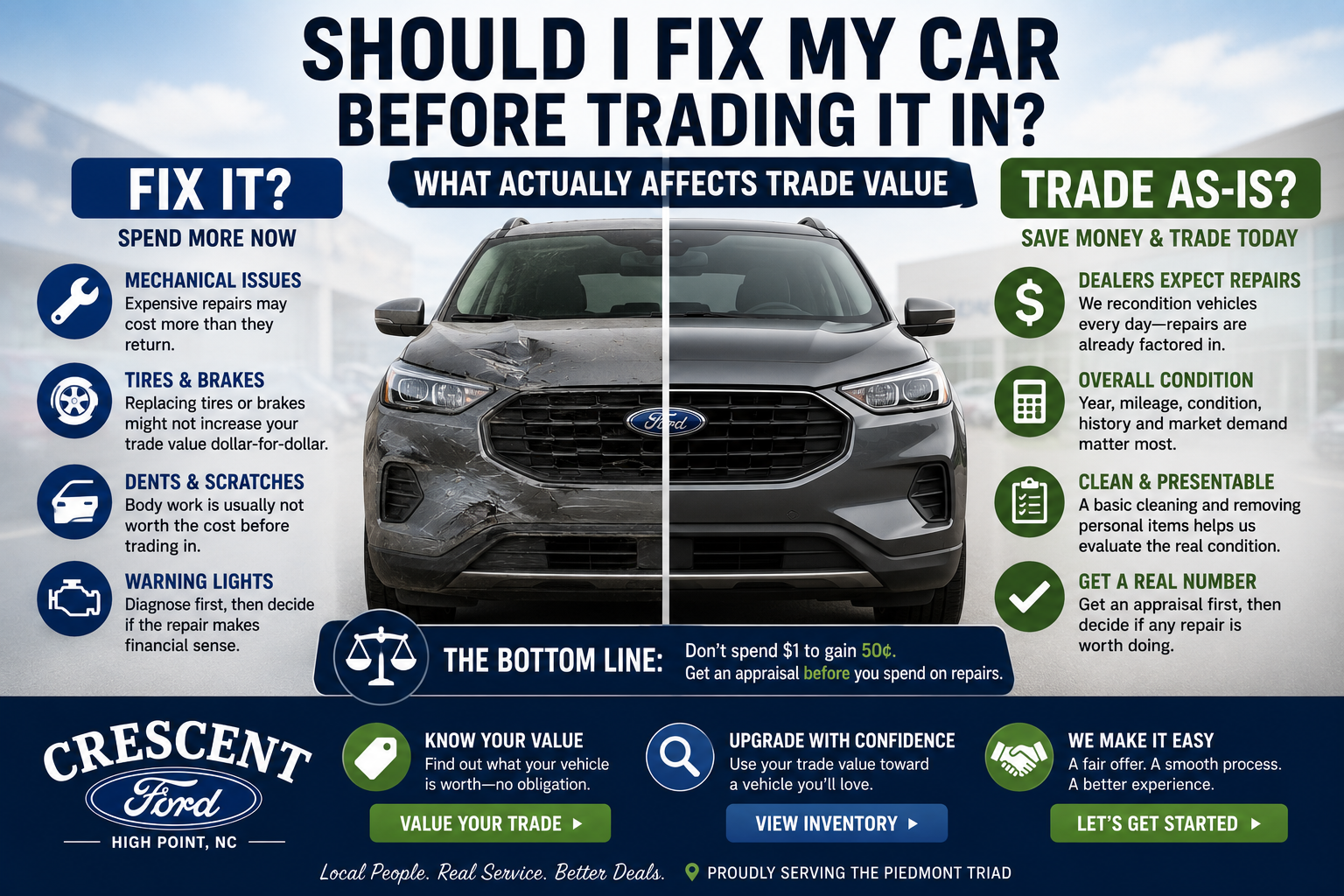
10. Don't Forget the Value of Your Trade
If you already own a vehicle, your trade can change the new-vs.-used decision significantly.
Suppose you discover you have $8,000 in positive equity.
Now you're not really comparing a $30,000 used vehicle with a $35,000 new vehicle from zero.
You're determining how that $8,000 affects each transaction.
Likewise, if you still owe more than your vehicle is worth, you need to account for that before deciding what replacement vehicle fits your budget.
Find Out What Your Vehicle Is Worth
A Real-World New vs. Used Cost Comparison
Let's put everything together.
These numbers are hypothetical examples, not current Crescent Ford vehicles or offers.
Imagine you're choosing between two comparable SUVs.
*Simplified examples excluding taxes, fees, down payment, trade equity and other transaction-specific amounts.
Looking only at purchase price:
Used saves $6,000.
Looking at this hypothetical financing:
The difference in total loan payments is closer to $3,500.
Now add another hypothetical scenario.
Suppose the used vehicle needs:
Four tires: $900
Brakes: $600
within your first year.
Now the financial gap could effectively shrink again.
But suppose the used vehicle has nearly new tires and brakes, and you qualify for a 5.9% used-car rate instead of 7.9%.
The math changes in favor of used again.
That's the entire point.
There isn't a rule that says:
Used = smarter
or
New = better.
You have to compare the vehicles actually available to you.
How to Compare New vs. Used the Right Way
If you really want to know which is the better deal, build a simple comparison.
Step 1: Pick comparable vehicles
Don't compare a base new model with a loaded used one without acknowledging the equipment difference.
Try to get reasonably close in:
Model
Trim
Engine
Drivetrain
Equipment
Step 2: Compare selling prices
Start with the actual vehicle prices rather than MSRP alone.
Step 3: Compare financing
Ask for:
APR
Term
Amount financed
Monthly payment
Total of payments
Step 4: Compare warranty
Determine what coverage each vehicle actually has.
Don't assume.
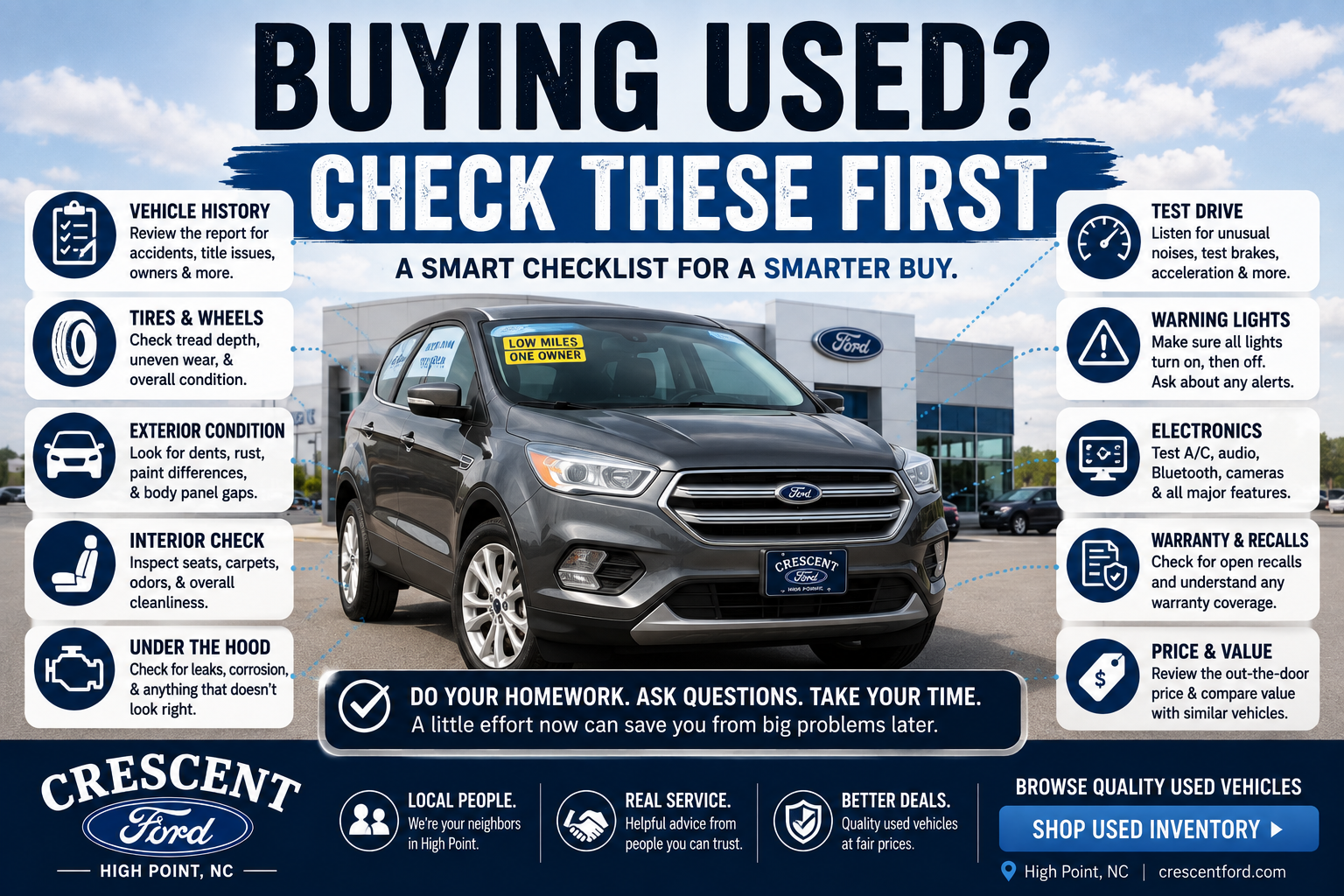
Step 5: Inspect the used vehicle's wear items
Look at tires, brakes, mileage, maintenance history and overall condition.
Step 6: Get insurance quotes
Use the actual VINs if possible.
Step 7: Think about resale
How long will you realistically own this vehicle?
Step 8: Look at the entire transaction
Now make the decision.
Not from one payment.
Not from one price.
From the whole picture.
When Buying New Makes the Most Sense
We'd lean toward new when several of these are true:
You're keeping the vehicle for a long time
If you're planning to drive it for 10 years, getting exactly what you want and starting at zero miles can carry more value.
New-car financing substantially improves the math
A lower used-vehicle purchase price can lose some of its advantage if the financing is considerably more expensive.
The new-vs.-used price gap is small
If a lightly used vehicle isn't much cheaper than new, compare carefully before assuming used is the better deal.
Warranty matters to you
If unexpected repair costs would be particularly disruptive to your budget, full new-vehicle warranty coverage can be valuable.
You need specific equipment
Truck shoppers are a great example.
If you need a particular tow package, drivetrain or configuration, buying the correct vehicle matters more than simply finding the lowest price.
You want the latest features
Technology changes quickly. New vehicles generally give you access to the latest version of available features and systems.
When Buying Used Makes the Most Sense
We'd lean toward used when:
Purchase price is your biggest constraint
Used opens significantly more possibilities at lower price points.
The savings are substantial
If the comparable used vehicle costs thousands less and the financing and condition still look good, that's meaningful.
You want more features for your money
Used can let you step into a higher trim without increasing your budget.
You don't mind some mileage
There's nothing inherently wrong with buying a vehicle that has already been driven.
Condition and history matter much more than the psychological appeal of an odometer reading "10."
You're paying cash
If financing isn't part of the equation, the lower purchase price of used becomes easier to compare directly.
You find the right vehicle
Sometimes a particularly well-maintained used vehicle with the right equipment, mileage and price simply makes sense.
Shop Used Vehicles in High Point
What About Certified Pre-Owned?
Certified pre-owned can occupy an interesting middle ground between new and traditional used.
A qualifying certified vehicle can give you:
Used-vehicle pricing
A required inspection/certification process
Defined eligibility requirements
Additional warranty coverage associated with the certification program
Other program benefits depending on certification level
But don't buy something simply because the word "certified" appears next to it.
Compare:
Certified used vs. regular used vs. new.
Sometimes certified provides exactly the balance you're looking for.
Sometimes another option makes more financial sense.
The correct comparison is still the complete transaction.
Should You Buy a Brand-New Ford or a Used Ford?
For Ford shoppers specifically, we'd use the same framework.
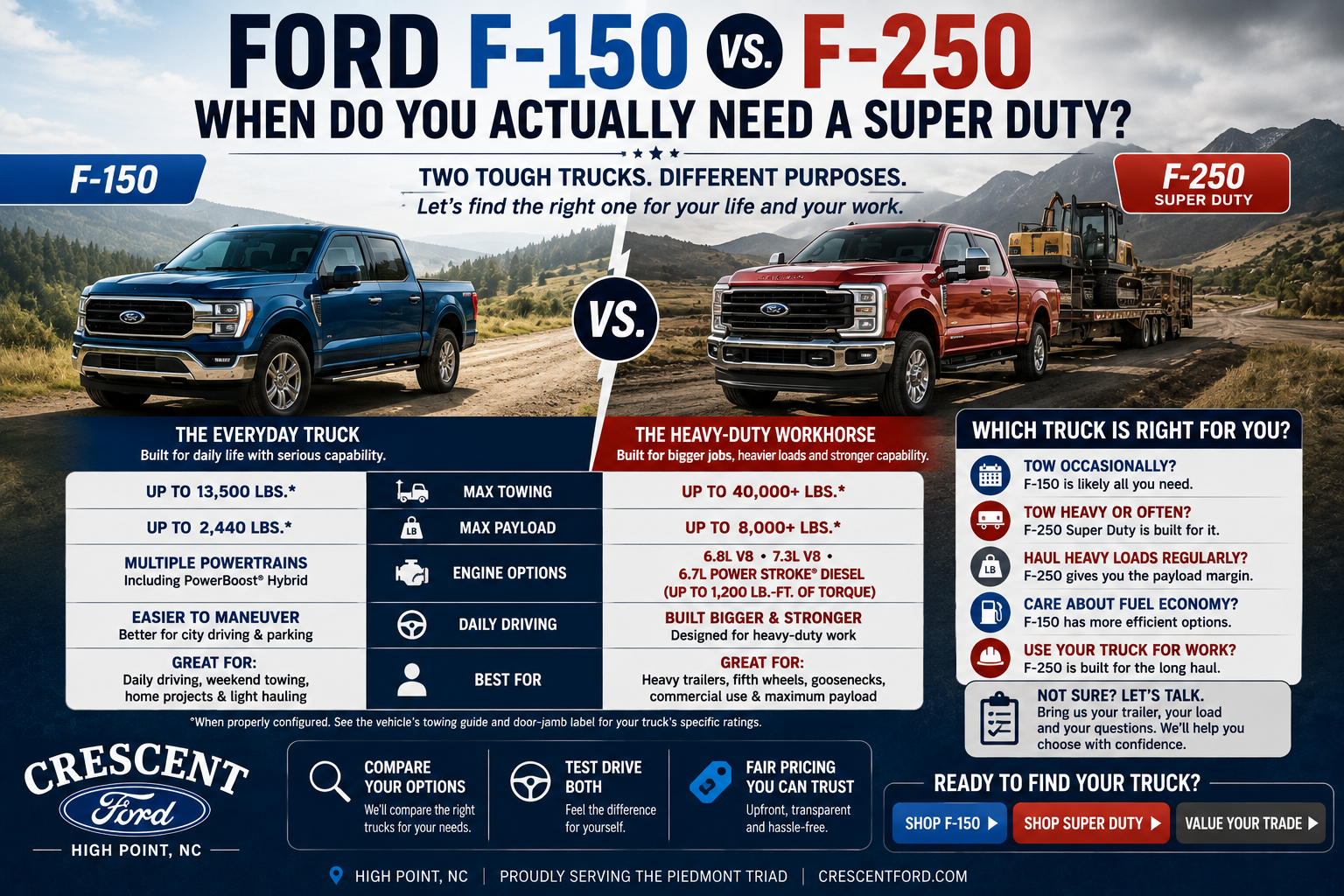
Suppose you're deciding between a new F-150 and a two-year-old F-150.
Don't just ask:
"How much cheaper is the used one?"
Ask:
Are they comparable trims?
Do they have the same engine?
Does the used truck have the equipment I need?
What's the mileage?
What's its condition?
What warranty remains?
What financing is available on each?
Are there current Ford incentives on the new truck?
What will each cost me over the time I expect to own it?
The same applies to Explorer, Bronco Sport, Maverick and the rest of the Ford lineup.
Sometimes used will clearly win.
Sometimes new will be closer than you expected.
What If I'm Shopping on a Monthly Payment?
This is where you need to be particularly careful.
Very different vehicles can produce similar monthly payments simply by changing:
Down payment
Loan term
Interest rate
Trade equity
Amount financed
So don't ask only:
"Can you get this to $550 per month?"
Ask:
What is the selling price?
What is my trade worth?
What's my payoff?
How much am I financing?
What's the APR?
How long is the loan?
What's the total of payments?
A lower payment isn't automatically a cheaper vehicle.
Sometimes it's simply a longer loan.
Explore Your Financing Options
Is New or Used Better for a First-Time Buyer?
Either can work.
For a first-time buyer, we'd prioritize:
Affordable total cost
Reliable transportation
Affordable insurance
A manageable loan
The right vehicle for your actual needs
A less expensive used vehicle can be an excellent first purchase.
But a reasonably priced new vehicle with favorable financing and warranty coverage can also make sense.
Don't assume first-time buyer automatically means:
"Buy the cheapest used car you can find."
An inexpensive vehicle that immediately needs substantial repairs isn't necessarily inexpensive transportation.
What About a Used Vehicle With Very Low Mileage?
This can be one of the most compelling comparisons.
A late-model vehicle with low mileage may give you:
A lower purchase price than new
Modern features
Potential remaining factory warranty
Relatively little wear
But these vehicles can also retain enough value that the price difference versus new is smaller.
Again:
Run the numbers.
The closer the used vehicle gets to new-car pricing, the more important financing and warranty become.
Is It Better to Buy New or Used If You Drive a Lot?
High-mileage drivers have an interesting decision.
Buying used can mean starting with a lower purchase price, but you're also starting with more miles already on the vehicle.
Buying new means you're beginning at essentially zero miles but potentially absorbing more depreciation as you accumulate mileage quickly.
There's no automatic winner.
If you drive 25,000 miles per year, we'd pay particular attention to:
Reliability
Fuel economy
Warranty mileage limits
Maintenance
Resale expectations
How long you plan to keep the vehicle
Your use case matters more than a generic new-vs.-used rule.
Is It Better to Buy New or Used in 2026?
For most shoppers, here's the answer:
Shop both until the numbers give you a reason not to.
Don't walk into the process saying:
"I'll never buy new because it's a waste of money."
And don't assume:
"I need new because used cars aren't reliable."
Both statements are too broad to be useful.
Instead, identify what you need and what you can comfortably afford.
Then compare actual new and used vehicles.
At Crescent Ford in High Point, that means you can compare new Ford vehicles against used cars, trucks and SUVs from Ford and other manufacturers without having to decide which category you belong in before you start shopping.
For drivers around High Point and the Piedmont Triad, we'd suggest this process:
Find the vehicle you need.
Compare new and used examples.
Run the financing.
Account for your trade.
Then choose whichever complete transaction makes more sense for you.
That's a much better way to buy a vehicle than following an old rule about whether new or used is always the smarter choice.
Frequently Asked Questions About Buying New vs. Used
Is buying a new car a waste of money?
Not necessarily. A new vehicle generally costs more and experiences early depreciation, but it can also provide full new-vehicle warranty coverage, the latest features and potentially different financing opportunities. Whether it's worth the additional cost depends on the specific new and used vehicles you're comparing and how long you plan to own them.
Is it cheaper to buy new or used in 2026?
Used vehicles generally have lower purchase prices than comparable new vehicles. However, financing rates, warranty coverage, maintenance needs and current manufacturer incentives can affect the total cost. Compare the actual vehicles and financing available when you're ready to buy.
Are interest rates higher on used cars?
Used-auto financing often carries higher rates than comparable new-auto financing, although your actual APR depends on factors including credit, lender, loan term and vehicle. New vehicles may also occasionally qualify for manufacturer promotional financing.
Is a three-year-old used car better than buying new?
It can be. A three-year-old vehicle may offer meaningful savings while still providing modern features and relatively low mileage. But if its price is close to new, compare financing, remaining warranty and condition before deciding.
Is certified pre-owned better than regular used?
Not automatically. Certification can add inspection requirements, warranty coverage and other program benefits, but the certified vehicle's price, condition, mileage and financing should still be compared with both non-certified used and new alternatives.
Should I buy new if I plan to keep the car for 10 years?
Buying new can become particularly appealing for long-term owners because you begin with essentially zero miles, receive the full applicable new-vehicle warranty and can choose the configuration you want. A well-maintained used vehicle can still be an excellent long-term purchase, however.
Is used always better because someone else already paid the depreciation?
No. Used vehicles generally avoid some early depreciation, but that doesn't automatically make them the better financial choice. Purchase price, financing, condition, repairs, warranty and expected ownership period all matter.
Should I compare monthly payments when choosing new vs. used?
Yes, but don't compare payments alone. Compare the selling price, APR, loan term, amount financed, down payment and total of payments. A lower monthly payment can simply result from stretching the loan over a longer period.
Should I get my trade-in value before deciding between new and used?
Yes. Knowing your current vehicle's approximate trade value and loan payoff, if applicable, gives you a much clearer picture of the amount you'll need to finance on either a new or used replacement.
Can Crescent Ford help me compare a new Ford with a used vehicle?
Yes. Crescent Ford carries new Ford vehicles along with pre-owned vehicles, allowing shoppers to compare options based on their budget, equipment needs and preferred ownership costs.